Showing posts with label Brazil. Show all posts

Sunday, March 24, 2024

The Quest for the Cherry-throated Tanager

 August 2022: A Trip to Espirito Santo for a Very Special Bird

Sometimes you go somewhere on a whim.  I had never been to the state of Espírito Santo, Brazil despite having been to all the states surrounding it.  An old friend who lives in the capital city Vitória saw my eBird map and concluded, not unreasonably, that I was avoiding him somehow.  Ironically I had actually long wanted to go, having made some financial donations to the conservation of the Red-billed Curassow many years before, but in the end it was another bird that gave me the excuse to finally visit.

Thursday, August 25 - Domingos Martins / Pedra Azul

The temperature was a delight, so refreshingly chilly compared to the oppressive heat and humidity of the Amazon basin.  After a long flight first to São Paulo, then to Viiória, Pablo and I had picked up a rental car and headed off into countryside more reminiscent of Northern Italy then of the lowlands of Brazil we had left behind.  A little local birding, then we made our way to our hotel, a delightful place celebrating a family that had emigrated to Brazil from the Italian Alps and which even boasted a fondue restaurant.  
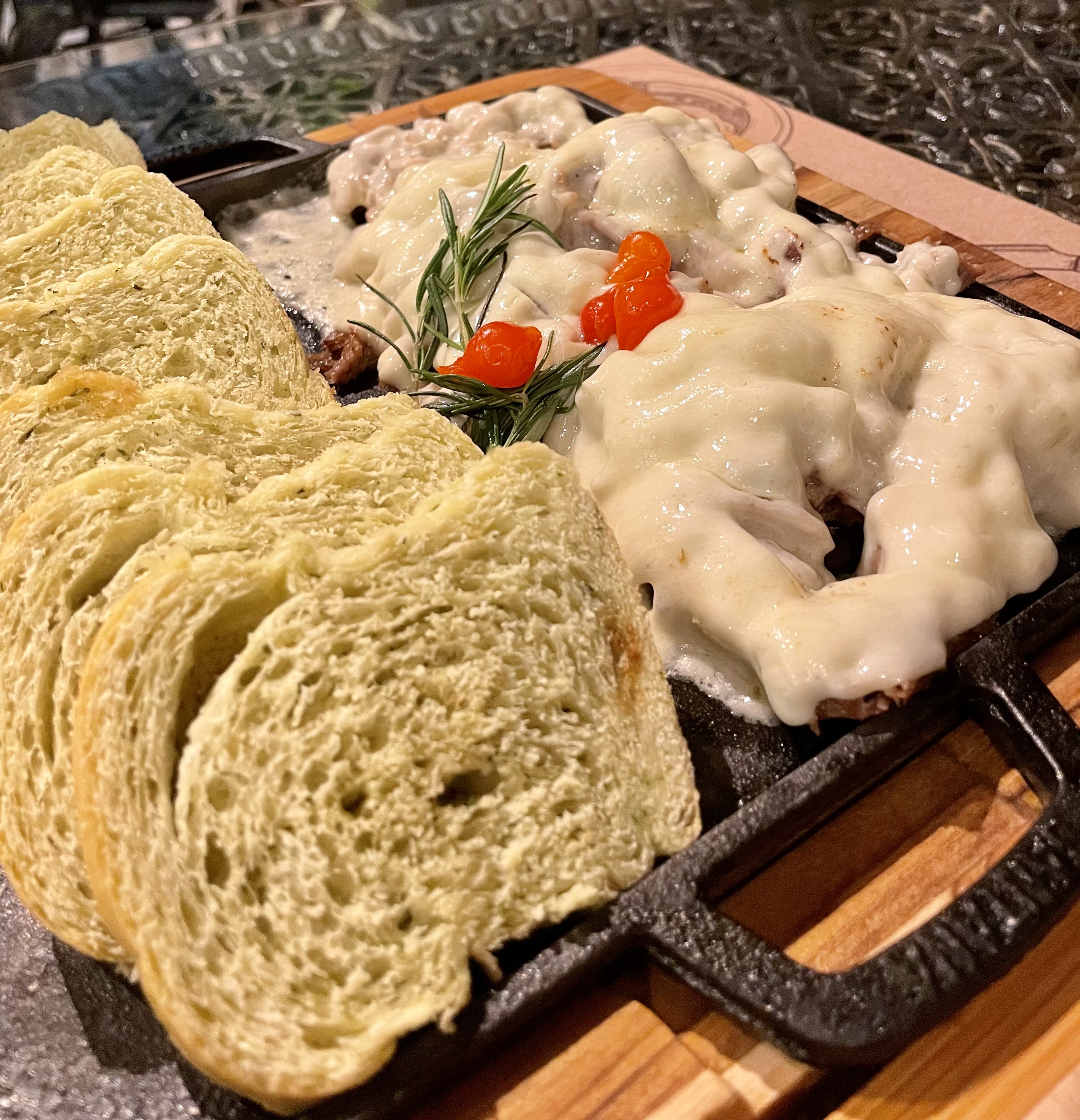
Some very hearty local fare for dinner ... we had left the land of
rice and beans behind ...


After a substantial local dinner we opted to walk a bit and digest some of those carbs so decided to do a little owling.  The suburban setting didn't seem all that promising but the in the end we heard a Black-capped Screech-Owl so declared victory and then settled in for a well earned night of sleep, ready for adventures tomorrow.

Friday, August 26 - Reserva Kaetés

The Cherry-throated Tanager has a total world population of perhaps 12 individuals, all of which live in one tiny reserve in Espírito Santo.  For some reason this species had been on my mind all year.  A nesting pair had been photographed the previous year and the photos just peaked my interest.  Eventually I had to ask Pablo if he was interested in making a trip to see it, figuring his connections as a bird researcher might open the door and allow us to visit.

As it turns out, the local researchers from Instituto Marcos Daniel, the organization that had established and manages the reserve, were delighted to have some birders come and visit to see their work and their birds.  It not being the breeding season, we knew the birds would not hanging around a nest site, but we also knew that they would be somewhere in the vicinity (they literally have no-where else to go unfortunately) so we allowed ourselves two days to walk the trails at the reserve and see the tanagers.

Spot-breasted Antvireo and While-collared Foliage-gleaner


The technique for seeing tanagers when they aren't nesting seemed straightforward.  Walk back-and-for along the two long, straight trails that run through the reserve and intersect at the center.  The tanagers, likely in a small family group will be moving around and calling as they feed and, with luck, your path and that of the tanagers will intersect at some point.  Sounded simple enough, and with two days allocated it sounded simple enough; on the first morning I was actually wondering what we would do with our second day once we had seen the tanagers ...

Atlantic Black-throated Trogon and
Ochre-faced Tody-Flycatcher


And so off we went and the reserve was indeed very birdy.  On the first morning we saw or heard around 45 species, including some nice things like Hooded Berryeater, Robust Woodpecker and Sharpbill.  We weren't at all worried that we hadn't bumped into the tanagers and took a break trail-side for lunch and a rest, before hitting the trails again for round two.

The afternoon session produced more of the same, lots of birds and plenty of tanagers ... Azure-shouldered, Brassy-breasted, Rufous-headed, and Black-goggled ... but not the ones we came for.  We eventually had to admit defeat and headed off for more of that delicious local food (after two weeks of rice and beans in the Amazon, the food was a big plus) and some sleep.  There was always day two ...

Did I mention that the food here was good?

Saturday, August 27 - Reserva Kaetés

Back to the trails and had a really nice morning of birding.  We took the time to get a good look at White-breasted Tapaculo, a bird that sounds more like a toad than like something with feathers.  We also saw (not just heard) Brown Tinamou and Such's Antthrush while quietly stalking ground birds.  But as for the target ... no luck.  At this point my anxiety was starting to rise and I asked if it might be possible to stay another morning for a fifth chance at the birds.

Two of my favorite bird names ... Black-goggled Tanager and
Sibilant Syrystes


So the afternoon, and session number four.  We started at the center of the reserve and chose a direction to walk covering about a half mile before turning around to head back and perhaps try another trail.  Then, a flurry of excitement.  One of the researchers heard Cherry-throated Tanager calls and we ran up the trail to where they seemed to be.  For an instant there was a fast moving flock of birds in the canopy overhead, multiple people calling directions and the birds were moving fast, and away from the trail.  Hard to describe my relief when I got my bins on a bird, but no time to waste and I whipped the camera around and employed a technique known as 'spray and pray' firing a volley of shots into the leaves where I thought the bird might be.  And then ... they were gone, the whole encounter lasted only a couple of minutes.   But I had a record shot!

OK, it wasn't a good shot ... but that didn't really matter ...

So a success, and a lot of fist-bumps and high-fives.   Birders who visit the reserve during breeding season are usually shown to the nest site and easily see the birds but we had to work for ours and, after the fact, that felt pretty good.  This really is one of the rarest birds on earth which makes the experience of seeing them special but also rather poignant.  There are plans to expand the reserve so perhaps there's a glimmer of hope for the this species but otherwise its future does not look good.  There are many challenges for any species that gets this close to extinction but you have to admire the tenacity of the last survivors who continue to breed in the last, tiny sanctuary.  I really hope they make it.

Sunday, August 28 - Vitória

Dinner and social time and a reluctant final packing before returning to the US after nearly a month in Brazil.  More Brazil trips to come, I hope so ...

OK, I may have overdone the food here but ...


Friday, July 28, 2023

Capuchinbirds and Pink Dolphins

 August 2022: Birding in Amapá and Pará in the Brazilian Amazon

Back to Brazil, with the talented and ever-patient Pablo Vieira Cerqueira, for an almost month-long trip covering multiple states and cities.  I had a bunch of goals for this trip; to finally get to the lowland Amazon (after a dozen trips to Brazil, I'd never seen the Amazon river or a pink river-dolphin), to chase a specific rarity in the SouthEast, and to catch up with friends in São Paulo and Vitoria. 

Saturday, August 6 - Sunday, August 7

Two days in São Paulo.  Rest and recovery, catching up with friends, and a visit to one of my three favorite restaurants in the world, the marvelous D.O.M.

Officially on vacation ...

Monday, August 8 - Macapá

I felt very proud of myself.  I left São Paulo super early, hopped a flight to Brasilia then changed planes and headed up to Macapá where I even managed to negotiate getting an Uber to my hotel (all in Portuguese). Pablo showed up later that day and we jumped in a rental car and headed inland, away from the Amazon, and ended up in a semi-retired mining town called Serra do Navio where a very basic hotel and one restaurant stayed open largely to support the maintenance crews that still worked at the mine. The presence of the mining operation had preserved a decent chunk of forest which would otherwise almost certainly have been lost over the years.  So we had all we needed, the rooms were basic but the food was tasty, and those maintenance guys looked after the trails we planned to bird the next few days.

My first view of the Amazon river believe it or not, after a dozen trips to
Brazil, I finally got to see the Amazon.

Tuesday, August 9 - Wednesday, August 10 - Serra do Navio

Two days on the trails and my first time properly in the Guianan Shield meant I had a ton of life birds waiting for me.  We started along a dirt road through flooded forest looking for Band-tailed Antshrike, a real rarity in Brazil, known only from this one site.  We dipped this time, but I hardly noticed because we quickly racked up a bunch of other lifers for me including Double-banded Pygmy-Tyrant, Todd's Sirystes, McConnell's Spinetail, and Guianan Streaked-Antwren.  Moving on, we worked a more heavily vegetated trail and the birds kept coming, with Guianan Trogon, Brown-bellied Stipplethroat, Todd's Antwren, and (the Hellmayr's form of) Black-headed Antbird all joining the burgeoning list.  Fun, busy, productive birding.

Black-headed Antbird and Brown-bellied Stipplethroat


As we moved down the trail we kept encountering a most disturbing noise, like a tortured cow lowing from the forest.  Eventually, I just had to see one and so Pablo played some tape bringing in a Capuchinbird, a creature straight from the Henson Studios, a truly bizarre looking muppet of a bird.  With its bald blue face poking out of fluffy rich red-brown plumage it truly looked odd enough, but add the cow-like call and it really qualified as just, well, silly.  What a truly bizarre creature ...

Ended day one with try number two for Band-tailed Antshrike, and dipped again.

The next morning gave us Tiny Tyrant-Manakin and a long skirmish with a fast moving antbird flock eventually yielded that superstar of the Amazon, a White-plumed Antbird, definitely one of the ant-things I most wanted to see here.  We also had Rufous-throated Antbird and Common Scale-backed Antbird on this trail, and Olive-backed Foliage-gleaner nearby, then as we emerged into the sunlight we added Caica Parrot and Guianan Toucanet.  In the afternoon we gave the Band-tailed Antshrike a third try and again came up short but we did get Smoky-fronted Tody-Flycatcher as a consolation prize.

Common Scale-backed Antbird

Too soon, our time here was up but there was time for one last crack at the Band-tailed Antshrike.  By this time I felt we'd invested so much time in this bird that to give up now would be foolish.  I'd like to report that fourth time was a charm ... but we dipped again, the bird simply was not there that week.  We did get a very unexpected Sooty Barbthroat though, another species known only from the Guianas with just a handful of records from Brazil, so that was a very nice consolation prize.  Time also for one final trail, which gave us Spot-tailed Antwren and Guianan Puffbird to round things out.

Such a great spot and so many good birds.  I may well have ruined my first trip to Guiana, if I ever get round to getting there, but it did wonders for my Brazil list and a good time was had by all.

Thursday, August 11 - Porto Grande

Back to the Amazon today and a return to Macapá for the next few nights (nicer hotel, better food).  Made a long stop in some dryer habitat on the way back though for two specific target lifers.  Rufous-crowned Elaenia popped up almost as soon as we got out of the car, along with noisy and conspicuous Rusty-backed Antwrens.  We had to work harder for Black Manakin though and covered some ground before eventually chasing down a female bird, declaring victory, and continuing our journey without seeing a male.

Rusty-backed Antwren and Rufous-crowned Elaenia

Friday, August 12 - Santana

Today was a full day of birding along the edge of the Amazon in what looked to me like grubby second growth and cleared fields but apparently contained important relics of a rare flooded forest biome.  It wasn't the flooded forest you see on TV, with dolphins swimming through giant trees, rather a marshy, dense, low scrubby sort of forest that clung on in patches and strips between fields.  We did see a lot of birds though, some of them quite good ones.

Crimson-hooded Manakin and Glossy Antshrike

Among the highlights here were stunning Crimson-hooded Manakin, Scaled Spinetail, and the extremely local White-tailed Goldenthroat, a very good bird for Brazil.  We also took time to stop and listen for parrots and eventually, after covering a lot of miles, bumped into a group of Short-tailed Parrots, not the most colorful of parrot but another life bird for me. 

Saturday, August 13

Mostly a travel day but it was my birthday and I was hoping for a birthday lifer.  Some quick morning birding along local roads did the trick and yielded a Golden-bellied Euphonia, perhaps not the most spectacular or rare bird of the trip but hey, it's nice to get a lifer on your birthday.

Sunday, August 14 - Belém

The flights just didn't work out today so we had a morning in Belém before taking the evening flight down to another mining operation at Carajás.  This set-up was very much active and very much larger than the last, with impressive security, a whole workers' city, and a very nice hotel with expansive buffet dinner and breakfast.  Mixed feelings about the mines, the actual mine here covered a lot of ground, but then so did the protected forest and the latter almost certainly would not be here still without the former. 

I'd been feeling a bit under the weather the past few days and sure enough, by the time I got to Carajás it was pretty obvious that I'd picked up another bout something (a mild COVID or a close cousin).  Had a long night of 'fever-sleep' then spent the next 3 days feeling flu-y (and probably looking, and sounding, like an extra from a low-budget zombie movie) but Pablo and I decided to ignore it as much as we could, keep to ourselves, wear masks in cars/hotel, and press on ...  and overall it turned out to be a pretty mild bout compared to the last time.  The things you do for birds.

Monday, August 15 - Tuesday, August 16 - FLONA de Carajás (forest trails)

Two days to explore the forest of Carajás might have been a little better if I'd been feeling better.  As it was, I felt had no energy and dragged along the trails behind the guides, pausing to look at birds when told to, resting where I could, and generally not enjoying the experience very much.  There were some great birds here and Pablo and the local guide worked hard to get me on then (especially seeing as I wasn't exactly at my sharpest) but by the second day even Pablo has started to adjust the itinerary with longer, more ambitious trails swapped for short walks near the car and a number of possible birds quietly dropped from the conversation.  I should probably have been resting in bed but I didn't want to come all this way and miss the target birds.  In the end it was a bit of a compromise; I did see some good birds but didn't always have a lot of fun doing it.


The star bird here was definitely the White Bellbird a big white cotinga that sits on the top of trees and belts out a 'zoink' call that can be heard miles away.  We heard one as soon as we got out of the car but it turned out to be surprisingly hard to see in the canopy when viewed from the ground.  In the end it took us a half hour of careful peering and moving around to find a gap in the canopy where we could actually see it.  An amazing creature though and worth a dose of 'warbler neck'.

Among the other good, or new birds we saw were White-throated Woodpecker, Natterer's Slaty-Antshrike, Spotted Tanager, White-crested Guan, Black-breasted GnateaterOrnate Stipplethroat, Snethlage's Today-Tyrant, Dwarf Tyrant-Manakin ... the list goes on.  A big personal favorite for me was the Wing-banded Antbird, a weirdo among ant-things that reminded me of a Rail-Babbler as it tottered along through the leaf litter seemingly oblivious to us admiring apes.  Also, it was here that I passed another personal milestone which I'd hoped to hit on this trip when Opal-crowned Manakin became my 1,000th species for Brazil (my first 1,000 species country in eBird!).

Amazonian Scrub-Flycatcher

One night we did some night birding, somewhat curtailed because my stamina limited the day.  Still, we did get some great night birds including the recently described (not yet split in Clements) Xingu Screech-Owl, a Black-banded Owl, multiple Pauraques and Blackish Nightjars, a Great Potoo and even a Cryptic Forest-Falcon thrown in for good measure.  Imagine what we could have had if we'd been able to stay out longer.

Wednesday, August 17 - Vila Tapete Verde / Parauapebas (Núcleo Urbano de Carajás)

Still in Carajás but birding some disturbed habitat outside the forest where we got good looks at a currently undescribed form of Amazonian Spinetail accompanied by a chorus of Rothman's Titi-Monkeys.   Later, in the center of town we added Chestnut-headed Chachalaca to my list (almost done with Chachalacas ... one to go ... if they don't split some more).  There were plenty more birds to see here so I'll hopefully come back to the forest one day but we still did end up with a great list and a pile of life birds for me.

Chestnut-headed Chachalaca in suburban gardens.

Brazilians are VERY fond of chocolate.

Thursday, August 18th - Travel Day

More driving, lots of it.  Then another flight that ended up in Manaus, a city I'd long wanted to see.  I still do want to see it though because all we really saw was the airport and the nearby Ibis Hotel ... so another thing on the 'come back for' list ...

Friday, August 19 to Tuesday, August 23 - P.N. de Amazônia

An early flight and another long drive on dusty roads brought us finally to Amazônia National Park and a simple but lovely little guest house on the river that became our home for the next five days. 

The view from the 'bar', we saw two species of river-dolphin here ...

We had five days to work the forest trails here and dropped into a pattern of doing one trail at dawn, coming back for lunch and siesta then hitting a second trail late afternoon through dinner. The weather was challenging, super hot and incredibly humid meant that things got pretty quiet during the middle of the day.  The hotel location was so lovely though that I didn't at all mind sitting at on the river bank during the heat of the day.  Although it was tough birding we did get a lot of great birds, including a number of star-birds that stood out as real accomplishments given the conditions.  Among the highlights here ...

Brown-Chested Barbet in a canopy vine tangle.  (Green-backed) Dark-winged Trumpeters on the trail and Ihering's Antwren in a mixed canopy flock.  

A major target here was the elusive Pale-faced Bare-eye, a really difficult bird to find in the Amazon but our local guide had heard one in a flock along one of the trails.  We spend a full morning working up and down the trail, walked miles, sweated pints, and saw ... well ... very little of note except a few Saki Monkeys.  As so often the way though, we slogged back to the car closer to mid-day in a silent forest and, when we were almost there, heard a fast moving understory flock with calling Harlequin Antbirds.  Now this species is a spectacular ant-thing and was a lifer for me, on any other day it would have been the day's star but today we were looking around them hoping for more, and sure enough after chasing the flock for 15 minutes, a Pale-faced Bare-eye popped up and crossed the tail.  Humidity, what humidity ...

We also spent a full morning on Black-bellied Gnateater, a brute of a gnateater and another really hard to find bird.  Once again the guide had a territory staked out but it still took us most of the morning to get some decent views in the shadows of the forest floor.  The humidity here was truly oppressive and very uncomfortable eventually knocking out my camera, simply overwhelmed by the condensation, and so no photos for me for a few days while everything dried out back at the lodge.

No Neotropical birding trip is complete without a battle with antpittas and, with two target species here, we devoted two full afternoons to games of cat-and-mouse with the mischievous little buggers.  Tapajos Antpitta surrendered relatively easily but Amazonian Antpitta battled us across two days before giving us a glimpse and joining the list.  Standing motionless in a blind for hours in that hear was not a fun experience but least, and the end of the day, we had cold caipirinhas to look forward too and our victory was duly celebrated.

Birds on the sand islands in the Tapajos River . Sand-colored
Nighthawks, three species of martins


One day we did a boat ride on the river, a pleasant break from the sticky heat.  The sandy river islands have some specific habitats, small ephemeral forests between floods, and we were able to winkle out Amazonian Tyrannulet, Blackish-Gray Antshrike and Black-chinned Antbird in these miniature worlds.  We also saw Tucuxi and Pink River-Dolphins and enjoyed a cool breeze on a moving boat.  Luxury ... 

Black-chinned Antbird

On our final day we crossed the Tapajos River again and hiked trails on the other side in search of two specific targets.  Tapajos Hermit popped up pretty quickly along the trail but we had to hike a distance to a specific site and play tape to get a shy Tapajos Fire-eye to break cover and give good views.  The fire-eye was another of the 'hard to see' birds here and we did really well with our targets, getting all the main ones.  Overall a great, if somewhat sticky, visit.  And once again, I'll get a Harpy Eagle and a Jaguar (neither of which I've ever seen) on the 'next' visit.


Tuesday, July 30, 2019

Tapirs and Caiman on the Rio Cristalino

July 2019: A Short Stay at the Legendary Rio Cristalino Lodge in Mato Grosso

Back in 1995, I went to Brazil for the first time.  I flew to São Paulo, changed planes and flew on to Cuiaba, then spent a week birding in the Pantanal and in the nearby cerado habitat.  It was a low budget trip, we stayed in very basic accommodation and I could only afford to take part in the first week of what for others was a two week trip.  I saw 273 species of birds, most of them new for me, and I saw my first Giant River Otters and Giant Anteaters.  Despite the trip being so short I was quite simply entranced with the country and figured that I'd be back.  Indeed, since that trip I've made more than a dozen trips to Brazil, ten of them specifically for birding.

After I left Brazil that first time, the group of birders I was with went on to Alta Floresta and spent a week at the Rio Cristalino Jungle Lodge, where they saw a ton more birds and several Brazilian Tapirs.  Not to worry I thought, I'll probably get there before too long ... then 24 years passed by in a flash ... and I never did get round to going Rio Cristalino (and never saw a tapir of any sort).

In the meantime, two of my good birding friends, Carlos Sanchez and Rich Hoyer, both worked as guides at the Cristalino so I kept being reminded that I really ought to go, and yet somehow I just couldn't get organized to fit a visit into my schedule.  I knew it would happen someday though and it turns out that 2019 was the lucky year.  This year my Summer unexpectedly opened up and I decided to expand a long-planned  NorthEast Brazil trip,  grabbing the opportunity, and a room at the lodge at short notice.  Game on ...


Sunday, June 23 - Thursday, June 27 - Cristalino Jungle Lodge

A long travel weekend.  On Saturday I'd flown from New York to Bogotá and then on to São Paulo (sacrificing time for a cheap business class seat on Avianca).  I'd spent Saturday night at the airport Marriott at Guarulhos then taken an early Sunday morning flight to Cuiaba and, despite a delay, just made a connecting flight to Alta Floresta.  From there, my fellow lodge guests and I were met and driven an hour or so to a boat, then had a nice quick ride up the river to the lodge.  Made it ... finally.

Once we got oriented I, and two fellow birders who I did not know beforehand, got assigned a birding guide.  I wasn't thrilled to be lumped with other birders who, although they turned out to be delightful people and charming company, didn't initially strike me as 'hard core' birders.  However, I was happy to be assigned Sidnei Dantas as a guide ... another talented young ornithologist and a good friend of a friend.  And everything worked out in the end.

Pompadour Continga 
Once settled in, the routine for the next few days was set.  Up before dawn for a delicious breakfast, birding until lunch time, a huge and scrumptious Brazilian meal for lunch, siesta, more birding in the later afternoon until just after dark, shower, bar time, more mouthwatering Brazilian food for dinner, then collapse into bed.  I would quite happily spend the rest of my life doing exactly just that, at least in a place like Cristalino with amazing food, a great wine list, and awesome birds.  Perhaps the perfect vacation and so very different from the logging camp I'd stayed in the last time I made it to the Amazon.

A Pai da Mata made with fresh local herbs.  The lodge had a full bar and a good
wine list ... I only allow myself one cocktail every now and then, this was the one
and it was worth it.
Over the next 4 days we birded steadily and accumulated a list of nearly 250 species (or put another way, more species than I saw in the UK during the entirety of my childhood).  Of these, around 30 were lifers for me, nothing super rare, but some good birds.

Red-throated Piping Guan
Perhaps the best birds we saw were some local forest specialties like Alta Floresta Antpitta along with a good selection of antbirds, antshrikes, antwrens, woodcreepers, foliage-gleaners, and the many other mixed flock species from the forest interior.   Some of the ant swarms we saw were quite active and we were able to get to grips with a few ant-followers like Bare-eyed Antbird (although no ground-cuckoos unfortunately) plus there was always the comedic relief (for others) of seeing me high-stepping down the trail to get through a swarm of angry ants (army ants are one of the few things on earth that can persuade me to break into a brief run).

The time on the trails was mixed in with quite civilized boat rides along the rivers.  The birds here weren't quite so special but there were lots of big, photogenic things to keep us interested.  On the big charismatic bird front, I also finally caught up with Razor-billed Curasow, an amazing cracid that I'd long wanted to see.

Hoatzin and Sunbittern

Beyond the river-bank birds, the boat trips offered the best chances for other types of life and we did manage to see quite a few good things.  Spectacled Caiman were not uncommon on the river but one night we also managed to spot-light a Cuvier's Dwarf-Caiman in the fading light, a life crocodilian for me. These small heavily armored little crocs have large numbers of bony plates in their skin, which has protected them from the handbag trade, although being small and shy they are still rarely seen.

Cuvier's Dwarf Caiman
On the mammal front we did see five species of primate - including Red-handed Howler Monkey, Red-nosed Bearded Saki-Monkey, and White-whiskered Spider-Monkey - two species of peccary, some bats,  and several Neotropical River Otters (who doesn't love encounters with otters?).

Neotropical River Otter
The absolute highlight of the trip for me though came one morning as we motored upstream in the boat and I noticed a large brown lump in the morning mist a few hundred yards ahead of us.  I couldn't quite make out what it was but my brain slowly processed the shape and saw that it was moving ... it looked a bit like a horse.  I got my bins on it as it sank low into the water so I could just see the top of it's head and ears ... and it raised it's trunk (!).   "Anta!" I shouted.  One of the few moments where I actually remembered the Portuguese word for an animal but couldn't for the life of me remember the English word.  So I kept shouting "Anta! Anta!" and gave directions as best I could as the Brazilian Tapir made it's way to the river bank and vanished into the dense undergrowth.  Finally my first tapir, after many, many years of wanting to see one.  I was ecstatic but had to quickly reign in my excitement when I realized that, while the guide and the boatman had both seen the animal, my American birding companions had somehow managed to miss it.  Guilty feelings all around ...  but I was quietly smiling to myself for the rest of the day.

Gray-headed Kite
By contrast, the best bird of the week was one that we never saw.  The others had opted to take an afternoon off so Sidnei and I were happily off up a trail working an ant-swarm and hoping for ground-cuckoos when he pointed out a distinctive trill.  The bird was loud and close but we couldn't see it, and it did sound awfully familiar.  Sidnei's theory was that it was a Peruvian Recurvebill,  a very good bird for this location and one rarely seen here in recent years.  Playing a recording confirmed the ID but, although we worked on it for quite a while, we never did get a glimpse.  Such is forest birding unfortunately, but still a good record.

Great Black Hawk
Night walks were also a great experience, being out in the forest after dark is always a treat.  Although we didn't see any large nocturnal mammals we did see lots of nightjars of several species, a Great Potoo and several owls.  Then there were always the cool smaller things like trapdoor spiders and whip-scorpions to make the night interesting, or odd tree-frogs, bats, spiny-rats, centipedes and giant crickets.  A great variety of life right outside our doors.

Blackish Nightjar roosting on one of the cabins

On the last full day, for a change of scenery, we went down to the main river and birded some of the sand islands there.  Pied Lapwings really do look a lot like Egyptian Plovers (I can say that now that I've seen the plover) and we spent a fair amount of time attempting to lure a Glossy Antshrike within range of the camera.  This was the place we were told to look out for Harpy Eagles but alas, none came to see us, although we did see two different Ornate Hawk-Eagles during our stay there.  Next time ... for me with Harpy Eagle, it's always next time ...

Pied Lapwing and Glossy Antshrike 

All too soon though it was time for me to head back to the real world.  I really could have stayed at least an extra few days but my plans were set, so back to Alta Floresta then Cuiaba and on to São Paulo.  I did bring a souvenir with me though ... on the flight to Cuiaba my ankles and lower legs were itching uncontrollably, and it only got worse during the day ... Chiggers!  Not my favorite invertebrate and I had 'gotten them good' so for the entire duration of my stay in São Paulo I had something to remember the Amazon.  Still, it was worth it, and I'm already plotting my next trip to the Amazon ....

Ceará Specialties and the Araripe Manakin

July 2019: A week chasing specialty birds in Ceará State, NorthEast Brazil.

Back in 2017 I joined a one-week Field Guides birding tour of Northern Bahia led by Bret Whitney.  I rarely do organized group tours but the dates were good, I'd long wanted to go to Bahia and it offered the chance to bird with Bret, a legend who discovered or named many of the specialty birds of NorthEast Brazil.  The tour was great and we saw some real star birds, the one downside though was that the other participants had just finished the Field Guides 'Nowhere but NorthEast Brazil' trip so all week I had to hear about all the amazing birds they'd seen the week before, many in the state of Ceará.  Two-and-a-half years later I'd arranged to get there myself and I had a list of target birds I really wanted.

The view from the mountains looking out over the plains of Ceará.
Saturday, June 29 - Guaramiranga

Since leaving Mato Grosso I'd had a few days in a nice hotel in São Paulo where I'd caught up with friends, eaten amazing food, and let my chigger-ravaged legs heal (it wasn't pretty).  That morning I'd flown up to Fortaleza, a city famous for beaches and unfortunately for it's high crime rate, met up with old birding buddy (and now PhD'd Ornithologist) Pablo Vieira Cerqueira, gotten in a rental car and headed straight out of town.

Our destination for the first few days was Serra de Baturité an isolated little mountain range standing out above the dry, mostly agricultural, plains of Ceará.  Considering all I'd heard about NorthEast Brazil and the deforestation, and massive environmental degradation that the region has been subject to, the mountains here were quite a surprise.  They had real tropical forest on them and the weather was cold, cloudy and wet in contrast to the sun-baked plains down below.  Indeed these mountains are a relic of the time when the Amazon Rainforest was connected to the Atlantic Rainforest.  The climate changed, the forests retreated from the NorthEast but these tiny fragments were left behind on their isolated mountains.  They were also left with a relic population of Amazon-like forest birds, isolated for long enough, many have now become distinct species or sub-species, and that's what we were here to see.

With a few hours to kill on Saturday afternoon we set off in search of our first main target, the GRAY-BREASTED PARAKEET, a very local endemic species with a world population numbering perhaps 250 birds.  There are very active conservation efforts underway to help this species and at several sites we saw nest boxes put up specifically for them.  One of these sites was a small guest house with lush gardens that served as a reliable stake-out for the parakeets so we took up places on a terrace behind the main building and waited for the parakeets to come to us.  It soon became obvious that the parakeets weren't actually all that far away because we could hear them calling from the dense canopy of a nearby tree.  Hearing and seeing were quite different things though and it took a while before the birds flew and landed in a place where we could get views through the dense leaves.  Great bird, and a great start to the trip target-wise.

Gray-breasted Parakeet
Sunday, June 30 - Guaramiranga

Today was a full day to explore the Serra de Baturité and to get to grips with the local endemic birds. We'd managed to bump into two, the Ceará Gnateater and the diminutive Buff-breasted Tody-Tyrant the night before so now we had a very specific list of things we needed to track down.

Ceará Gnateater 
Buff-breasted Tody-Tyrant
We spent much of the morning at Parque das Trilhas where we connected with the local form of Gould's Toucanet (common in the absence of other toucans and aracaris), Band-tailed Manakin, Lesser Woodcreeper (since split as Ceará Woodcreeper) and Red-necked Tanager.  Our main target here was the Ceará Leaftosser which, although officially still part of Rufous-breasted Leaftosser is another isolated form and almost certainly a future split.  The leaftosser played hard to get for a while but eventually surrendered and like all 'islands' (and these mountains are an island) it seemed that the number of species was small (with a high percentage being endemic) but that each species was relatively common in the absence of competition.

Band-tailed Manakin
Rufous-breasted Leaftosser (Ceará)
With all the targets in the bag by lunchtime we really only had one thing to focus on so spent much of the late afternoon birding session making a concerted effort for the local population of Short-tailed Antthrush, another tiny relic population that might constitute a good species given it's isolation.  Unfortunately there may only be a handful of individuals left in this population and, while we both independently thought we heard single calls along the trail, we never did get a look at this species.

Monday, July 1 - Hotel Pedra dos Ventos

An early start, some local birding, and then we came down from the mountains and into the hot, dry plains.  We drove all morning through Caatinga habitat, then climbed up into some rocky outcroppings to find our hotel for the next night and some very different birds.  It was as though we'd left Brazil and teleported to Arizona.  The rocks, the cactus, the thorn-scrub, all looked very familiar to me.  Of course, the birds were quite different.

Still in Brazil, although it looks a lot like Arizona here.
Our main target birds at this site were both supposed to be close to the hotel buildings, so before lunch we took a few minutes to walk around the pool area and look for the PYGMY NIGHTJARS that were supposed to breed within feet of the bar and the pool.  The tiny area of rocks and cactus, perhaps 60 feet by 30, with people walking around and through it seemed improbably for nightjar habitat.  Sure enough though, after a careful search we found three of them, totally trusting their camouflage, sitting right next to the tables of the hotel dining area.  Later that evening we watched them hunt around the pool area, they really are tiny and very delicate in flight.  An awesome species, and one I'd long wanted to see.

Pygmy Nightjar
That afternoon we headed out to bird the scrub around the hotel which, again like Arizona, looked empty at first sight but was actually packed full of birds.  Our main targets were the local White-browed Guans which conveniently came to corn put out by the hotel's owner along with several White-naped Jays, another lifer.  The last target bird and potential lifer there took longer to find though but eventually we managed to lure a stunning Ochre-backed Woodpecker into view.  Everything seemed to be going according to plan.

White-Browed Guan
Ochre-backed Woodpecker
Tuesday, July 2 - Sítio Pau Preto

Another travel day, another change of scenery, this time ending up down in the caatinga at a wonderful little pousada run by a local ornithologist.  With a half dozen potential life birds for me in the area we spent the afternoon chasing them all down.  Many weren't actually that rare or hard to find so we quickly bumped into them.  Two birds however were special and took a little more time.

The third 'big' target of my trip was GREAT XENOPS, an odd giant in a group of tiny treecreeper-like birds that are common in a wide range of forest habitats.  This big brother of the group turned out to be easy to hear but not at all easy to see in the dense thorn scrub, and it took a concerted effort before we were finally able to get partial views in the thick vegetation.  Needless to say, my photos weren't great, but at least I got a few record shots and that, plus four other life birds (and a couple of local forms that may one day be species) made for a memorable afternoon of birding.

Great Xenops skulking.
 On the way back to the pousada, local knowledge paid off big time when we were guided directly to a single White-naped Xenopsaris (no relation to the Xenops) a scarce bird here at this time of year and another lifer.  That followed by a home cooked meal and a swarm of Least Nighthawks overhead at dusk made for a great end to the day.  With a star bird ahead for tomorrow.

White-Naped Xenopsaris
Wednesday, July 3 - Crato

Today was the last of the big target birds but we thought we'd stop off and quickly pick up a lifer White-browed Antpitta for me on the way.  Needless to say, whenever you say you'll 'quickly' pick something up the birds don't cooperate, so we ended up spending several hours and only hearing, but not seeing, the antpittas.

With the day ticking on though we had to leave and drove up over the Chapada do Araripe (plateau) to look for, you guessed it, the ARARIPE MANAKIN.   In Portuguese this bird is called Soldadinho do Araripe (Little Soldier of Araripe) which describes it's distinctive plumage, reminiscent of a 19th Century solider in dress uniform.  It's so distinctive in fact that you have to wonder how this bird remained undiscovered until 1996, but somehow it did.  Most likely it was it's rarity that kept it hidden, with recent population estimates as few as 150 individual birds (up to as many as 700) and a world range of just a few square kilometers, it's one of the rarest and most range-restricted birds on earth.  Luckily it's habitat is well known and accessible to birders.  The entire known world breeding range is encompassed in the grounds of the Arajara Waterpark which is open to the public only on weekends but which lets birders in (for free) on other days.

So to the waterpark we went, signed in and wandered past the empty attractions to an area of shady riparian forest along a clear, fast moving, stream.  Soon enough we heard manakins calling but had to wait a long while before we caught a glimpse of one shifting it's perch and then sitting still on a hanging vine.  Once we found one bird though it was easy to follow and I was able to get some decent photos.  A truly spectacular bird and a global rarity.  This one is on a lot of birders' bucket lists ... but no longer on mine.

Araripe Mankin, just spectacular ....
On the way back we also made another stop for White-browed Antpitta and this time we were lucky enough to see one well.  Another home cooked meal and more nighthawks and our time in Ceará was done, with new adventures to look forward to ahead.  It really was a wonderful week (well 5 or 6  days) with some truly memorable birds, great company, and interesting places.  There are still a few birds in the NorthEast I haven't seen though, so perhaps there's another trip in my future one day.