Showing posts with label South America. Show all posts

Friday, July 28, 2023

Capuchinbirds and Pink Dolphins

 August 2022: Birding in Amapá and Pará in the Brazilian Amazon

Back to Brazil, with the talented and ever-patient Pablo Vieira Cerqueira, for an almost month-long trip covering multiple states and cities.  I had a bunch of goals for this trip; to finally get to the lowland Amazon (after a dozen trips to Brazil, I'd never seen the Amazon river or a pink river-dolphin), to chase a specific rarity in the SouthEast, and to catch up with friends in São Paulo and Vitoria. 

Saturday, August 6 - Sunday, August 7

Two days in São Paulo.  Rest and recovery, catching up with friends, and a visit to one of my three favorite restaurants in the world, the marvelous D.O.M.

Officially on vacation ...

Monday, August 8 - Macapá

I felt very proud of myself.  I left São Paulo super early, hopped a flight to Brasilia then changed planes and headed up to Macapá where I even managed to negotiate getting an Uber to my hotel (all in Portuguese). Pablo showed up later that day and we jumped in a rental car and headed inland, away from the Amazon, and ended up in a semi-retired mining town called Serra do Navio where a very basic hotel and one restaurant stayed open largely to support the maintenance crews that still worked at the mine. The presence of the mining operation had preserved a decent chunk of forest which would otherwise almost certainly have been lost over the years.  So we had all we needed, the rooms were basic but the food was tasty, and those maintenance guys looked after the trails we planned to bird the next few days.

My first view of the Amazon river believe it or not, after a dozen trips to
Brazil, I finally got to see the Amazon.

Tuesday, August 9 - Wednesday, August 10 - Serra do Navio

Two days on the trails and my first time properly in the Guianan Shield meant I had a ton of life birds waiting for me.  We started along a dirt road through flooded forest looking for Band-tailed Antshrike, a real rarity in Brazil, known only from this one site.  We dipped this time, but I hardly noticed because we quickly racked up a bunch of other lifers for me including Double-banded Pygmy-Tyrant, Todd's Sirystes, McConnell's Spinetail, and Guianan Streaked-Antwren.  Moving on, we worked a more heavily vegetated trail and the birds kept coming, with Guianan Trogon, Brown-bellied Stipplethroat, Todd's Antwren, and (the Hellmayr's form of) Black-headed Antbird all joining the burgeoning list.  Fun, busy, productive birding.

Black-headed Antbird and Brown-bellied Stipplethroat


As we moved down the trail we kept encountering a most disturbing noise, like a tortured cow lowing from the forest.  Eventually, I just had to see one and so Pablo played some tape bringing in a Capuchinbird, a creature straight from the Henson Studios, a truly bizarre looking muppet of a bird.  With its bald blue face poking out of fluffy rich red-brown plumage it truly looked odd enough, but add the cow-like call and it really qualified as just, well, silly.  What a truly bizarre creature ...

Ended day one with try number two for Band-tailed Antshrike, and dipped again.

The next morning gave us Tiny Tyrant-Manakin and a long skirmish with a fast moving antbird flock eventually yielded that superstar of the Amazon, a White-plumed Antbird, definitely one of the ant-things I most wanted to see here.  We also had Rufous-throated Antbird and Common Scale-backed Antbird on this trail, and Olive-backed Foliage-gleaner nearby, then as we emerged into the sunlight we added Caica Parrot and Guianan Toucanet.  In the afternoon we gave the Band-tailed Antshrike a third try and again came up short but we did get Smoky-fronted Tody-Flycatcher as a consolation prize.

Common Scale-backed Antbird

Too soon, our time here was up but there was time for one last crack at the Band-tailed Antshrike.  By this time I felt we'd invested so much time in this bird that to give up now would be foolish.  I'd like to report that fourth time was a charm ... but we dipped again, the bird simply was not there that week.  We did get a very unexpected Sooty Barbthroat though, another species known only from the Guianas with just a handful of records from Brazil, so that was a very nice consolation prize.  Time also for one final trail, which gave us Spot-tailed Antwren and Guianan Puffbird to round things out.

Such a great spot and so many good birds.  I may well have ruined my first trip to Guiana, if I ever get round to getting there, but it did wonders for my Brazil list and a good time was had by all.

Thursday, August 11 - Porto Grande

Back to the Amazon today and a return to Macapá for the next few nights (nicer hotel, better food).  Made a long stop in some dryer habitat on the way back though for two specific target lifers.  Rufous-crowned Elaenia popped up almost as soon as we got out of the car, along with noisy and conspicuous Rusty-backed Antwrens.  We had to work harder for Black Manakin though and covered some ground before eventually chasing down a female bird, declaring victory, and continuing our journey without seeing a male.

Rusty-backed Antwren and Rufous-crowned Elaenia

Friday, August 12 - Santana

Today was a full day of birding along the edge of the Amazon in what looked to me like grubby second growth and cleared fields but apparently contained important relics of a rare flooded forest biome.  It wasn't the flooded forest you see on TV, with dolphins swimming through giant trees, rather a marshy, dense, low scrubby sort of forest that clung on in patches and strips between fields.  We did see a lot of birds though, some of them quite good ones.

Crimson-hooded Manakin and Glossy Antshrike

Among the highlights here were stunning Crimson-hooded Manakin, Scaled Spinetail, and the extremely local White-tailed Goldenthroat, a very good bird for Brazil.  We also took time to stop and listen for parrots and eventually, after covering a lot of miles, bumped into a group of Short-tailed Parrots, not the most colorful of parrot but another life bird for me. 

Saturday, August 13

Mostly a travel day but it was my birthday and I was hoping for a birthday lifer.  Some quick morning birding along local roads did the trick and yielded a Golden-bellied Euphonia, perhaps not the most spectacular or rare bird of the trip but hey, it's nice to get a lifer on your birthday.

Sunday, August 14 - Belém

The flights just didn't work out today so we had a morning in Belém before taking the evening flight down to another mining operation at Carajás.  This set-up was very much active and very much larger than the last, with impressive security, a whole workers' city, and a very nice hotel with expansive buffet dinner and breakfast.  Mixed feelings about the mines, the actual mine here covered a lot of ground, but then so did the protected forest and the latter almost certainly would not be here still without the former. 

I'd been feeling a bit under the weather the past few days and sure enough, by the time I got to Carajás it was pretty obvious that I'd picked up another bout something (a mild COVID or a close cousin).  Had a long night of 'fever-sleep' then spent the next 3 days feeling flu-y (and probably looking, and sounding, like an extra from a low-budget zombie movie) but Pablo and I decided to ignore it as much as we could, keep to ourselves, wear masks in cars/hotel, and press on ...  and overall it turned out to be a pretty mild bout compared to the last time.  The things you do for birds.

Monday, August 15 - Tuesday, August 16 - FLONA de Carajás (forest trails)

Two days to explore the forest of Carajás might have been a little better if I'd been feeling better.  As it was, I felt had no energy and dragged along the trails behind the guides, pausing to look at birds when told to, resting where I could, and generally not enjoying the experience very much.  There were some great birds here and Pablo and the local guide worked hard to get me on then (especially seeing as I wasn't exactly at my sharpest) but by the second day even Pablo has started to adjust the itinerary with longer, more ambitious trails swapped for short walks near the car and a number of possible birds quietly dropped from the conversation.  I should probably have been resting in bed but I didn't want to come all this way and miss the target birds.  In the end it was a bit of a compromise; I did see some good birds but didn't always have a lot of fun doing it.


The star bird here was definitely the White Bellbird a big white cotinga that sits on the top of trees and belts out a 'zoink' call that can be heard miles away.  We heard one as soon as we got out of the car but it turned out to be surprisingly hard to see in the canopy when viewed from the ground.  In the end it took us a half hour of careful peering and moving around to find a gap in the canopy where we could actually see it.  An amazing creature though and worth a dose of 'warbler neck'.

Among the other good, or new birds we saw were White-throated Woodpecker, Natterer's Slaty-Antshrike, Spotted Tanager, White-crested Guan, Black-breasted GnateaterOrnate Stipplethroat, Snethlage's Today-Tyrant, Dwarf Tyrant-Manakin ... the list goes on.  A big personal favorite for me was the Wing-banded Antbird, a weirdo among ant-things that reminded me of a Rail-Babbler as it tottered along through the leaf litter seemingly oblivious to us admiring apes.  Also, it was here that I passed another personal milestone which I'd hoped to hit on this trip when Opal-crowned Manakin became my 1,000th species for Brazil (my first 1,000 species country in eBird!).

Amazonian Scrub-Flycatcher

One night we did some night birding, somewhat curtailed because my stamina limited the day.  Still, we did get some great night birds including the recently described (not yet split in Clements) Xingu Screech-Owl, a Black-banded Owl, multiple Pauraques and Blackish Nightjars, a Great Potoo and even a Cryptic Forest-Falcon thrown in for good measure.  Imagine what we could have had if we'd been able to stay out longer.

Wednesday, August 17 - Vila Tapete Verde / Parauapebas (Núcleo Urbano de Carajás)

Still in Carajás but birding some disturbed habitat outside the forest where we got good looks at a currently undescribed form of Amazonian Spinetail accompanied by a chorus of Rothman's Titi-Monkeys.   Later, in the center of town we added Chestnut-headed Chachalaca to my list (almost done with Chachalacas ... one to go ... if they don't split some more).  There were plenty more birds to see here so I'll hopefully come back to the forest one day but we still did end up with a great list and a pile of life birds for me.

Chestnut-headed Chachalaca in suburban gardens.

Brazilians are VERY fond of chocolate.

Thursday, August 18th - Travel Day

More driving, lots of it.  Then another flight that ended up in Manaus, a city I'd long wanted to see.  I still do want to see it though because all we really saw was the airport and the nearby Ibis Hotel ... so another thing on the 'come back for' list ...

Friday, August 19 to Tuesday, August 23 - P.N. de Amazônia

An early flight and another long drive on dusty roads brought us finally to Amazônia National Park and a simple but lovely little guest house on the river that became our home for the next five days. 

The view from the 'bar', we saw two species of river-dolphin here ...

We had five days to work the forest trails here and dropped into a pattern of doing one trail at dawn, coming back for lunch and siesta then hitting a second trail late afternoon through dinner. The weather was challenging, super hot and incredibly humid meant that things got pretty quiet during the middle of the day.  The hotel location was so lovely though that I didn't at all mind sitting at on the river bank during the heat of the day.  Although it was tough birding we did get a lot of great birds, including a number of star-birds that stood out as real accomplishments given the conditions.  Among the highlights here ...

Brown-Chested Barbet in a canopy vine tangle.  (Green-backed) Dark-winged Trumpeters on the trail and Ihering's Antwren in a mixed canopy flock.  

A major target here was the elusive Pale-faced Bare-eye, a really difficult bird to find in the Amazon but our local guide had heard one in a flock along one of the trails.  We spend a full morning working up and down the trail, walked miles, sweated pints, and saw ... well ... very little of note except a few Saki Monkeys.  As so often the way though, we slogged back to the car closer to mid-day in a silent forest and, when we were almost there, heard a fast moving understory flock with calling Harlequin Antbirds.  Now this species is a spectacular ant-thing and was a lifer for me, on any other day it would have been the day's star but today we were looking around them hoping for more, and sure enough after chasing the flock for 15 minutes, a Pale-faced Bare-eye popped up and crossed the tail.  Humidity, what humidity ...

We also spent a full morning on Black-bellied Gnateater, a brute of a gnateater and another really hard to find bird.  Once again the guide had a territory staked out but it still took us most of the morning to get some decent views in the shadows of the forest floor.  The humidity here was truly oppressive and very uncomfortable eventually knocking out my camera, simply overwhelmed by the condensation, and so no photos for me for a few days while everything dried out back at the lodge.

No Neotropical birding trip is complete without a battle with antpittas and, with two target species here, we devoted two full afternoons to games of cat-and-mouse with the mischievous little buggers.  Tapajos Antpitta surrendered relatively easily but Amazonian Antpitta battled us across two days before giving us a glimpse and joining the list.  Standing motionless in a blind for hours in that hear was not a fun experience but least, and the end of the day, we had cold caipirinhas to look forward too and our victory was duly celebrated.

Birds on the sand islands in the Tapajos River . Sand-colored
Nighthawks, three species of martins


One day we did a boat ride on the river, a pleasant break from the sticky heat.  The sandy river islands have some specific habitats, small ephemeral forests between floods, and we were able to winkle out Amazonian Tyrannulet, Blackish-Gray Antshrike and Black-chinned Antbird in these miniature worlds.  We also saw Tucuxi and Pink River-Dolphins and enjoyed a cool breeze on a moving boat.  Luxury ... 

Black-chinned Antbird

On our final day we crossed the Tapajos River again and hiked trails on the other side in search of two specific targets.  Tapajos Hermit popped up pretty quickly along the trail but we had to hike a distance to a specific site and play tape to get a shy Tapajos Fire-eye to break cover and give good views.  The fire-eye was another of the 'hard to see' birds here and we did really well with our targets, getting all the main ones.  Overall a great, if somewhat sticky, visit.  And once again, I'll get a Harpy Eagle and a Jaguar (neither of which I've ever seen) on the 'next' visit.


Saturday, June 10, 2023

Tapirs and COVID

 December 2021: 'Back to Normal' Comes to a Screeching Halt

So after the success of the September Colombia trip, and with the certainty that COVID was under control and in decline, I booked another trip to South America for New Year's 2021.  The big birding tour companies were just starting to get their itineraries back up after a long period of inactivity, and feeling the need to support them (and the guides and lodges they in turn support) I booked two trips ... Field Guides to Ecuador with Willy Perez in December, and WINGS to Honduras with my old mate Steve N.G. Howell in February 22.

As December came around, a new COVID variant called Omicron started to dominate the headlines but, fully vaccinated, it didn't seem like it would get in the way of the December trip.  So off to Quito I went, planning some private birding before joining the group and heading down towards WildSumaco Lodge in the Amazon.

Wednesday, December 29 - Reserva Yanacocha

Up at 3am and meeting a local guide arranged via the local ground agents.  My target for the day was Imperial Snipe and the destination was Fundación Jocotoco's marvelous Yanacocha reserve.  The reserve is situated about 45 minutes from Quito, at high altitude on the Western slope of Pichincha volcano.  It normally opens at 7am but to see Imperial Snipe we needed to be there before dawn and so had sought permission to be there early.  The guide (I honestly forget his name) showed up on time, and other than my having to ask him to wear a mask in the car, seemed like a nice enough chap.  Soon enough we were bumping our way up the entrance road of the reserve and started out along the trails well before dawn and with snipe on our mind.

Imperial Snipe turned out to be quite easy to hear, there were several calling from the dense scrub along the road, but more difficult to see.  After marching back and for along the road for an hour we had managed to catch at least brief views of a couple in the lights as they crossed the road though.  No pictures, but good enough for the list.  Not a bad start.  


Andean Guan

With the target out of the way, I figured we'd enjoy the morning of birding and indeed, the trails were very birdy.  The guide however had assumed that I wanted to see BLACK-BREASTED PUFFLEG, the mega-rarity that the reserve had been established to protect.  I did indeed want to see it, I just didn't think it was likely or even possible.  Many birders look for this species here but few see it and so I'd just assumed it would be unlikely, and not a bird that could be deliberately targeted.  

Walking the trails, we saw plenty of hummingbirds, including Saphire-vented and Golden-breasted Pufflegs and we could hear the twitter of 'pufflegs' from the dense vegetations all along the trails.  We stopped at a feeder set-up, waited a while, then kept pushing along the trail, through a tunnel and further away from the HQ.  From time to time the guide played pygmy-owl tape with some generic mobbing hummingbird twitter, which did cause the local hummingbirds to twitter back and occasionally pop up or zoom by to take a look.  After an hour or so though, the until then largely silent guide exploded into action shouting "the puffleg, the puffleg" and yanking my attention round to a trail-side tree where a small hummingbird sat on a dead twig.  It was a puffleg, the puffs were visible.  It had a seemingly all dark front, a short tail and a short bill ... we'd been watching the other two species of puffleg all morning so this was pretty obviously our bird.  I had bins on it, put them down, swung my 400mm lens around and got the bird in the frame, pushed the shoot button and the autofocus kicked in ... and our puffleg dropped backwards and away from the perch just as the shutter fired.  At first I thought I might have captured an image of some sort, but alas, just a twig.  Oh well ... 

Shining Sunbeam and Buff-winged Starfrontlet
readily come to feeders and are thus easier to photograph


So that was exciting.  I was excited, the guide was deliriously excited both to find the bird and to get his client on it.  The rest of the morning just whizzed by with more birds but also just a great mood in spectacular scenery.  Soon enough though it was time to head back to Quito and so we drove the hour or so back to the hotel with a sense of having had a great morning out.  About half way back I realized we'd forgotten to put on masks and so I asked that we do so and we masked up for the second half of the drive.  Not a big deal at the time but ... as it turns out ... the best thing that happened on the trip (the puffleg) may well have been the moment that things started to go wrong.

Thursday, December 30 - Reserva Antisana and Papallacta 

Having connected with the WINGS group and the charming and energetic Willy Perez, who was going to lead it, the morning started with everyone very ready to go birding.  The night before we'd also bumped into other birding groups including one led by Gary Rosenberg, who I'd travelled with in Ecuador 20+ years before.  Lot of birders back in the field, the sense of normality returning.  As we piled into our bus I remember being really excited that COVID seemed behind us and we could all get back to traveling for birds, the thing we all obviously loved so much.

The day's itinerary was a repeat of a day on my last Ecuador trip but who doesn't love being in the Andes and seeing those spectacular birds every couple of years.  We saw Condors aplenty at Antisana, and picked our way though the full suite of antiplano specialties.  

Andean Condors and Tawny Antpitta


We also made a stop at Papallacta ... hey when it's not cloudy you have to go look for seed snipes right? ... where we were rewarded with Rufous-bellied Seedsnipes after a long-ish search.  Then, icing on the cake, the SPECTACLED BEAR at the pass was visible again, almost exactly in the place I'd seen it a year or so earlier.

Rufous-bellied Seedsnipe and Spectacled Bear


Tired but sated, we pulled into Cabañas San Isidro, our home for the next three days and for New Year's.  I hadn't been here in 20 years but I was excited to visit again (I had fond memories of Oilbirds from my last visit) and catch up with the owner Mitch Lysinger, who I'd birded with in Ecuador a few years before.  It truly is a lovely spot to spend a few days, the perfect place to spend New Year's Eve and to start a new year list.

Friday, December 31 and Saturday, January 1 - Cabañas San Isidro

Where to start, lots of birding, good food, and good company here.  Two highlights come to mind though.

San Isidro has a famous owl.  In eBird it's described as Black-banded Owl (San Isidro) and few people know what species it actually is except that everyone is sure it isn't really Black-banded Owl, a species known from lowland Amazonian forest.  So until someone writes a paper and describes it as a new species, most people refer to these owls as 'San Isidro Owl'.  We didn't see the owl on my last visit so it was a priority for me this time and it turned out to be quite easy ... the owl came to the restaurant building, attracted by the moth lights.  It would sit above the deck where we stood and wait until a particularly large and succulent moth blundered into the lights, then swoop down for a quick kill and a tasty snack.  Lodge guests stood right underneath it, chatted away, took flash photographs, and the owl ... well it just didn't care.  All life birds should be this easy.

The San Isidro Owl being selective about which moths it ate

Another special visitor also came to the restaurant area at night and this one was also a lifer but not a bird.  Mitch had set up a salt lick down the slope from the same balcony and at night a Mountain Tapir was regularly coming to visit for a salty snack.  I'd seen Brazilian Tapir but Mountain Tapir is much harder to see so I was keen to wait up for it.  Initially, after dinner, I had lots of company waiting there too, but over time the group dwindled as it got later and the tapir action proved slow.  By about 9pm, Willy and I saw a shape drift out of the forest and head for the salt lick, spotlights went on but instead of a tapir we saw a Red Brocket Deer, a nice mammal, rare for the lodge, but not the one we wanted.  Finally, by 10pm, I was all alone in my vigil and got rewarded for may stubbornness when the tapir waddled our of the forest at around 10:15pm.  Such a privilege to see this creature close up and, while I know it wasn't a noble or charitable thought, I was secretly quite glad that it had waited to give me a private audience.  Wonderful natural history experience.

Mountain Tapir ... 'back of the camera' shot, I've lost the original it seems ...

I went to bed a very happy camper that day, and totally exhausted ... slept a deep sleep ... almost as though I had a bit of a fever ....

The next day was New Year's Eve and we had a great day of birding with lots of special things.  The day started with White-bellied Antpittas at the feeding station and built up into quite a big list of the local species.   A celebratory dinner was a treat but I was feeling a bit tired so skipped some of the later festivities.   I think I also sneezed a few times ... innocent enough in other times but in the time of the COVID it drew suspicious and cautious looks from the group.

More birding the next day including a jaunt over to Cordillera Guacamayos where Greater Scythebill played hide-and-seek with us.  I felt fine, but had to reluctantly admit that I had a bit of a cold.  At that point I honestly was not thinking COVID as I'd been twice vaccinated and this hardly seemed like the symptoms of a series disease, more an air-conditioner type cold with the occasional sneeze.  I expected to shrug it off over the next day but that night, at Wildsumaco Lodge, I coughed a lot and had a hard time sleeping. 

Long-tailed Sylph

Sunday, January 2 - Wildsumaco Lodge

At breakfast I felt fine, ate heartily, and couldn't wait to go birding.  My coughing during the night had not gone unnoticed though and the group were very much on guard.  For politeness I kept a distance during the morning birding and stood back at the antpitta feeding stations when the Plain-backed and Ochre-breasted Antpittas came in for breakfast.   I also managed to pick up a trio of life hummingbirds with Gould's Jewelfront, Napo Saberwing, Black-throated Brilliant joining the list.  I'd wanted to get to this lodge for such a long time that I was determined to feel fine, tough it out, and keep birding.  By mid morning though it was obvious that my sneezing and snotting was freaking out the group and so I reluctantly headed back to the lodge on my own, went back to bed, and let the group have their morning of birding without me.

When the others returned to the lodge in the afternoon, Willy suggested a COVID test and of course it was positive and, unsure what quite to do in this situation, I opted to return to the hotel in Quito until I felt better.

Monday, January 3 - Tuesday, January 11- Holiday Inn at Quito Airport

The next part is a little hazy and a little sketchy.  The ground agent and the lodge management had arranged for a driver to drive me back to Quito where I was supposed to stay in our original hotel until I felt better.  It was a long drive, I was getting worse, and was close to passing-out by the time we got back to Quito.  Somewhere along the line though the plan had changed and I was delivered to a government sanctioned quarantine hotel at the Quito Airport where I was basically detained for the next 10 days until I could get a negative COVID Antigen test and leave the country.  This was a bit of a surprise at the time, but by the time I got there I basically collapsed unconscious on the bed and was in no state to argue with anyone.  

In retrospect this wasn't anyone's finest moment.  I had no idea what was going on and was basically dropped, close to unconscious, at a hotel in a foreign city where I didn't speak the language.  While folks may have tried to explain what was going on, I did not comprehend where I was going, what was involved or why, and was in no state to understand anyway.  To be fair I suppose, one has to remember the general hysteria people in the pre-vaccine world were feeling about COVID as a threat to others, and few governments or businesses acquitted themselves well in handling the situation at the time.  As it turns out, I was actually quite sick at that point but was lucky enough to pull through after a miserable, fever-wracked, 24-hour period where things could easily have gone the wrong way on me.  I was lucky I guess.

After a day or so I was able to call a doctor in the U.S. to try to work out what was going on (not that she could do very much from there but at least was able to reasure that the worst was probably over).  I also confirmed that I was being detained against my will when I tried to leave the room to get some fresh air and was firmly escorted back there.

So there I was ... stuck in a hotel room with two books, Spanish language TV, and room service.  Three times a day the nice people from the hotel brought me a meal (of their choice) from the room service menu for locals (not the more expensive room service menu for gringos).  The staff would put the food tray on a suitcase stand that blocked the door, knock, then leave quickly ... I never saw them in person.  House-keeping was a bottle of bleach-based cleaner and a roll of paper towels left in the bathroom.  My only in-person human contact was the medical technician, dressed in full protective gear, who came once every day or so to administer the COVID test (still the eye-watering 'little lobotomy' at the time) ... and each day for 9 days, it remained stubbornly positive, even after my symptoms abated and I felt better.

Golden Grosbeak

What saved my sanity really was the fact that I was lucky enough to have a room that overlooked a weedy field next to the hotel. So each day, I birded from the window and it gave me something to do other than read and try to learn Spanish from the soap operas on TV.  On the fourth day I got a call on the phone ... it was Gary Rosenberg and he was, you guessed it, detained in the same hotel two doors down the hall.  From then on we birded together from our respective windows via text ... "Green-tailed Trainbearer heading right!" or "Ash-breasted Sierra-Finch in the dead tree" ... it wasn't much, but it helped.  

On the tenth day I got my negative test ... said goodby to Gary via text (he stayed another three days) and called American Express to get a flight.  Turns out there were no flights available to the US that afternoon and, terrified that my positive test would expire in 24 hours and I'd have to take a new one, I basically grabbed the next flight to anywhere out of the country.  Crossing the Ecuador border on the way to Panama City was a wonderful feeling.  It might be a while before I go back to Ecuador ...

Culpeo or Andean Fox

Sunday, September 4, 2022

Blue-billed Curassow and Antioquia Bristle-Tyrant

 September 2021: A Continuation of a Target Birding Trip in Colombia

Phase 2 of the trip started out with a traffic jam.  Our route to Tolima was a bit of a slog and we ended up sitting in traffic for hours while landslides were cleared and roads were opened up again.  It's one of the inevitabilities of traveling in the Andes.  The roads snake through river valleys and regularly get blocked by falling trees or mud-slides or get washed out by floods.  Everyone here is patient, there really isn't much of a choice and certainly no sensible alternative routes, and so there really isn't much to do but look at the birds and relax.  Eventually we made it to where we needed to get to, a little later than planned, but both in one piece.

Thursday, September 2 - Cañon del Rio Combeima / Ukuku Rural Lodge.

If you want to see doves you need to drive the roads early in the morning or be prepared for a long hard slog later in the day.  This maxim has been a fixture on so many trips I've been on, that it hardly seems odd to get up early and fret about being the first car to dive up a road before others have flushed the doves back to the forest.  The doves for their part often seem to oblige, toddling along on the roadside in the early low light and allowing for unobstructed views before slinking off into the undergrowth to hide for the rest of the day.  So at dawn on Tuesday we were driving up the Combeima River Canyon, hoping to beat any other traffic, with doves on our mind.

In the end we saw quite a few Tolima Doves, or at least birds we assumed were Tolima Doves.  We needed to get a good look though, see eye color, for a confirm on what was a life bird for me.  So we pushed up the valley, stopped when we saw a dove ahead of us, and tried to get scope views.  In the end we were also able to play a little tape and had one come crashing in close to us, giving us the necessary reassurance views.  One endemic down, two to go ...

Yellow-headed Brushfinch

With doves in the bag, the focus turned to Yellow-headed Brushfinches, a little tape was played, and a pair came storming out of the forest to see what was going on.  Well that was easy.  Back to the lovely hotel for more coffee and breakfast.  Two lifers before breakfast, every day should start that way.


Payback came quickly though.  Daniel gently broke the news to me that the road to our next destination, the Ukuku Rural Lodge was not wide enough to allow us to drive up.  So we had a walk ahead of us and the lodge it seemed was always located just a few hundred yards ahead, around the next bend.  We made it eventually, but it did seem that the initial estimates of the distance and steepness of the path might just have seen a little optimistic to encourage me along.  Still we made it there safely and there were hummingbirds and coffee waiting for us when we did.

I'd seen Santa Marta Blossomcrown with Daniel a few years before so I was curious to complete the set as it were and see the Tolima Blossomcrown too.  Now all that we had to do was find one among the 15 species of hummingbird that buzzed around the lodge's feeders and ornamental plantings.  There really were a lot of birds, Sparkling and Lesser Violetears, Bronzy and Collared Incas, Buff-tailed Coronets, Booted Racket-tails, Fawn-breasted Brilliants and White-bellied Woodstars, the list went on and on.  The blossomcrown made it's appearance of course just after someone from the lodge had handed me a cup of coffee, making me spin around looking for a level place to put it down then rush over just in case this was it's only visit of the morning.  In the end we needn't have worried though as 2 or 3 birds snuck into the plantings fairly regularly (but never to the feeders) and fed low down in the flowering shrubs many times over the next few hours.  A truly lovely spot.

Red-billed Emerald and Tolima Blossomcrown


Friday, September 3 - Puerto Salgar

Today was a travel day as we came down from the mountains into the heat and humidity of the Magdalena Valley.  We didn't really have any birding planned but we did choose a random side road and spend an hour looking at the locals just to break the journey and start to get to grips with some more 'lowland' species.   The road we chose wasn't particularly special, just a farm track that ran along some flooded ditches and through some thorny hedges and field borders.  Nevertheless, an hour or so there gave us 45 species of bird and a family group of Night-Monkeys sp. (not sure which one).  I'm used to seeing night-monkeys peeping out of holes in tall trees in dense forests so this was a very different habitat but they seemed happy enough, just curious as to who was passing by.

Yellow-chinned Spinetail and Night-Money sp.


Saturday/Sunday, September 4/5 - RNA Paujil

The highlight of the whole Colombia trip for me was a chance to go to this reserve.  We started early and had to drive a long and winding road through farm fields in order to get there, but we made plenty of stops and got some good birds.  

First decent bird of the day was a lifer for me, a Large-billed Seed-Finch which we found just outside a small village in roadside grasses.  As we made our way towards the park, the birds kept coming and by the time we got to the forest proper we had seen 60 or so species before we'd even reached the reserve.

The reserve HQ entrance though presented another challenge.  Two rangers had ridden out on dirt bikes to meet us at the nearest village and escort us in.  The road was narrow but passable but as we peeled off the main road to get down to the lodge the track narrowed until we eventually reached a place where the track had recently washed out all together.  To patch it up the rangers had assembled a sort of dam of sandbags and filled in an improvised roadway behind them.  Between the somewhat soft and unstable wall of sandbags, and the sheer sand cliff on the other side of the new 'road', was a muddy runway perhaps 7 feet wide.  We were traveling in Daniel's brand new, very shiny, very expensive Toyota LandCruiser, which coincidentally was roughly 7 feet wide.  To drive across the 'road' Daniel had to put one wheel on the sandbags, which visibly sagged and separated under the weight of the car, and have one wheel pressed up against the cliff.  Six inches the wrong way and he'd be scratching up one side of the car or sending it tumbling into a morass of mud and jungle vegetation in the stream bed below.  I got out of the car and walked (!), Daniel, looking cool and calm but with decidedly white knuckles, edged the car delicately between destruction and disaster and somehow managed to bring it through.  Nerves of steel ... 


Blue-billed Curassow

When we arrived at the lodge, still a little shaken up, the rangers quickly and excitedly called out that there were Blue-billed Curassows visible.  The star bird and my main target!  The roadway was forgotten and I rushed over to see the birds and get a photo just in case it was my only chance to see them.  This is a rare bird, endemic to Colombia and severely endangered with a population of perhaps only 1,500 birds.  Surely it was a real treat to see them so easily and I was thinking how lucky we were as we checked in a the lodge and sat down in the dining area for lunch, where we were joined by ... the curassows.  Turns out they were quite habituated at the lodge, came readily for kitchen scraps, and were very tame here.  Still, for a bird this rare it wasn't at all a disappointment to be able to spend time up close and personal with them.  Truly spectacular creatures.

After lunch and a siesta we did some afternoon birding and chose a spot where we had a good view of the surrounding forest from a somewhat rickety canopy tower and some nearby benches on the safer and more stable adjacent ground.  It truly was a very birdy place, particularly one tree where a huge mixed flock seemed to be mobbing something.  Search as we might though, expecting and owl or a hawk or perhaps a mammalian predator, we couldn't see what was driving the birds insane.  Only after detailed searching, and following the chachalacas to try to see what they were looking, at did we find the culprit, or rather the victim, a small Boa Constrictor dangling from the very end of a thin branch trying to avoid the murderous pecks of dozens of angry birds.  The poor thing looked as terrified as a reptile can look and had clearly had a very rough day but it got no quarter from the birds who continued to shriek angrily at it and try to reach down it's branch to continue the attack. 


Somewhat traumatized Boa Constrictor and the
Colombian Chachalaca intent on murdering it


After dinner we decided to do a little owling and set out in search of Choco Screech-Owl.  We weren't technically in the Choco but on many range maps there's a little 'hook' where Choco specialists spread up into the Magdalena Valley.  The screech-owl was one of those and also, luckily for us, a curious creature who came in close to check us out in the darkness.

Choco Screech-Owl

Next day we had a few target birds I wanted to see so we focussed on them.  Black Antshrike was easy to hear but took us a very long time to see and we ended up devoting a fair amount of the morning to it.  Russet-winged Schiffornis was my other target and, after hiking up a trail to a known territory we were able to get one to call but again had to work hard to see it sitting still in the dark understory of the forest.  Through the morning though we kept adding species and in the evening went back to the tower, racking up a really nice list of birds for the day.


Bare-crowned Antbird and Purple-throated Fruitcrow


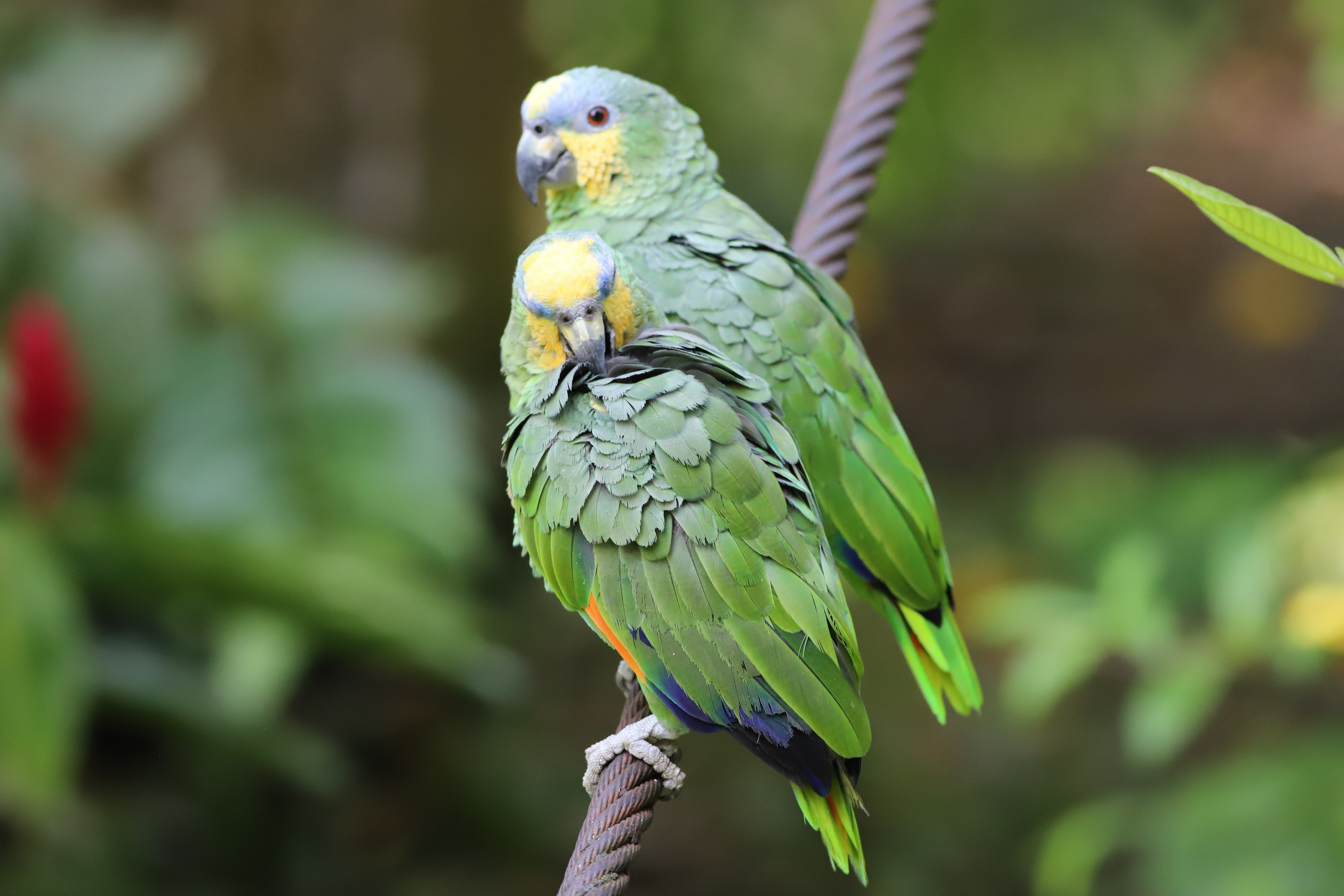
Black-chested Jay and Orange-winged Parrot


Monday/Tuesday, September 6/7 - RN Cañon del Río Claro

All too soon it was time to leave one wonderful place, only to swap it for another.  Maybe COVID ironically helped us here because at peak season, in normal times, I bet the Rio Claro Canyon is a zoo filled with crowds of tourists walking the trails, swimming and tubing on on the clear waters of the river.  As it was, the resort was reasonably quiet while we were there.  There were a few tourists but the trails weren't crowded and we were able to bird comfortably without dodging crowds of shrieking kids.

Out main activity for out first evening there was to look for the endemic Antioquia Bristle-Tyrant, a tiny yellow flycatcher that likes the canopy of tall trees and is generally rare and difficult to see even where it does occur.  Then, having failed in our first attempt there, we went to a cave a mile or so up river and waited for the Oilbird spectacular, eventually seeing hundreds of them emerge and whirl over the river as the light faded away (it sounds touristy but it was very cool).

Fasciated Tiger-Heron

Next day we tried again twice for the bistle-tyrant (nope) and birded some local trails, cobbling together a nice mix of locals and adding some things to the trip list.  Then, just as I'd given up on the little bugger, attempt number 4, just as we were leaving, and the bristle-tyrant surrendered.  Sweet victory!

Antioquia Bristle-Tyrant in all it's glory ...

Wednesday, September 8 - Vivero Cantos de Agua

After two plus weeks you really get into the routine of a birding trip but all good things come to an end even if it felt like a surprise to realize that the last day had arrived and I was less than 24 hours from my return flight from Medellin to New York.  With few targets left, Daniel suggested we try maybe for the Red-bellied Grackles that seemed regular at a relatives garden/nursery.  So we went along and spent a morning in a beautiful garden seeing lots of birds but no grackles.  As so often is the case though, the change of scenery made the difference and we went off, up the road to some higher elevations, before returning to the garden.  Just before we got there, two things happened quickly ... two Tyras, oversized weasel relatives, crossed the road in front of us and then ... we found the grackles and got to spend some quality time with them.

Red-bellied Grackle

And so the trip ended.  Roughly 400 species, roughly 40 of them lifers for me.  Wonderful country, wonderful company and zero COVID-related hassles.  Pretty much the perfect trip.  Can't wait to get back to Colombia one day.


Andean Motmot

Back to the Colombian Andes

 August 2021: A return to birding as COVID seemed to be ebbing

After nearly 18 months with no real travel, the Summer of 2021 seemed at the time to be something of a return to normal  The first waves of COVID appeared to be subsiding, most people I knew had been vaccinated, and it felt like perhaps the worst was over.  In the birding world there were signs of life; people we starting to travel again and certain birding destinations were 'opening up' for business and restrictions of travel were generally easing.  In that context I decided to take a trip to Colombia, a country that some of my friends had successfully visited earlier in the Summer and so planned a two week private trip with the great Daniel Uribe focussed mainly on some target birds I needed in the Northern Andes and the Magdalena Valley.

Tuesday, August 24 - Arrival in Bogota

Traffic in Bogota is legendarily bad.  Tonight it was worse.  I'd arrived at the airport after a hassle-free flight from New York, met up with Daniel and we'd hopped in a cab for what should have been a relatively quick ride to our hotel.  The traffic just wasn't cooperating though, and so when we came to a complete stop a quarter of a mile from our destination, we decided that we'd get out and walk to the hotel.  A few minutes later we arrived but had to detour around police tape and parked police cars that were blocking our way.  On the street in front of the hotel entrance was a dead body lying sprawled in a large pool of blood.  It seems that there had been a traffic accident and a motorcyclist had been hit and killed right there in front of the hotel.  No-one seemed in any rush to move the body, no ambulance was on the scene, and no-one had covered the body in any way, so to access the hotel we had to step gingerly around the blood and scuttle up the steps.  Welcome to Bogota.

Wednesday, August 25 - Laguna de Pedro Palo / Parque Natural Chicaque

Putting thoughts of last night aside, we got up early to avoid traffic and headed out to chase some specific targets close to Bogota.  First stop was Laguna de Pedro Palo where we birded along a dirt track through a mix of fields and woodland edges up to the lake and surrounding forest.  After 18 months with no Neotropical birding, this was my gentle re-entry to unfamiliar birds, so we took it slow and build up a nice list of mixed field and forest edge birds, making the time to see the Spinetails (Slaty, Striped-breasted and Ash-browed) and get back in the swing of the Neotropical birds.  

The target here was a low probability but Daniel had previously had Turquoise Dacnis in the canopy of some trees near the lake.  We thought it unlikely that the bird would be there again but found a nice vantage point where we could look down on the trees from the road, set up the scope, and started to scan.  A half hour later, Daniel did come up with the dacnis, almost exactly where he'd seen it the prior year.  A neat, colorful little bird, a Colombian endemic, and a good one to get on the list.  Not a bad start to the trip.

Contrasts ... Plain Antvireo and Golden-bellied Starfrontlet


Despite our fear of traffic, after lunch we plunged in again and skirted around Bogota to get to PN Chicaque, a small park with a hummingbird feeder and hopefully a life hummingbird for me.  The weather wasn't great when we arrived, the feeders looked somewhat neglected, and so we decided to go into the restaurant for the first of what would become innumerable cups of strong black Colombian coffee consumed on this trip.  Thus fortified we came back out into the cold and resumed our hummingbird vigil, enjoying Tourmaline Sunangels, Sparkling and Lesser Violetears, and Collared Incas before the star bird, the Golden-bellied Starfrontlet swept in to make an appearance.  Found only in Colombia and Venezuela, this bird really does have a golden belly, it looks like it has gilded chain-mail on it's bottom half.  This bird was coming infrequently to the feeders though so after a couple of visits and some decent views we decided that it we'd call it a day and head back to the hotel for a hot meal and some sleep.  No point rushing things, there were plenty of birds ahead of us.

Thursday/Friday, August 26/27 - PNN Chingaza

I'd birded Chingaza before, in fact I'd birded the entrance road, but a quick look at my needs lists showed that there were still a handful of species that justified a repeat visit.  So we spent another day in the first few miles of the park road and enjoyed a huge variety of species.  The vegetation is low here so birds are relatively visible and by slowly working up and down the road all day we got to grips with the various tanagers, conebills, flowerpiercers, hummingbirds, and brushfinches that dominate the habitat.  

Golden-crowned Tanager and Black-headed Hemispingus


Three of the 'tanagers' were life birds ... Golden-crowned Tanager, Black-chested Mountain-Tanager, and Black-headed Hemispingus and, after a fair amount of searching, we managed to get all three.  That left us free to focus on my other target, Bronze-tailed Thornbill, which eventually surrendered on day 2, and to focus on some specific locations for Ochre-breasted Brushfinch and the rare Brown-breasted Parakeet.  Basically, everything fell into place over the course of the two days; a tribute to Daniel's knowledge and persistence, and we were able to move on, on schedule, for the next target birds.

Habitat shot ... lots of Thornbills here ... probably

Saturday, August 28 - Laguna de Fuquene / Reserva Rogitama

The next day's target was one I was really looking forward to.  Apolinar's Wren is another localized Colombian endemic that lives in reed beds surrounding Andean lakes and while it looks a bit like a sedge wren it has all the cachet if a localized endemic and so was high on the list of birds I wanted to see.  We had a date with them at Laguna de Fuquene and the plan was to scan the reeds from a convenient hotel parking lot, grabbing the bird then moving on quickly.  The problem of course was that the birds had other plans, and so it seems did the local residents ... there simply were no accessible reed beds that we could view from the shore of the lake as they'd all been cut down.  Never daunted though, Daniel negotiated with some local boatmen and in no time at all we were off across the lake in a small fishing boat, heading for intact reed beds and wrens.

Apolinar's Wren (autofocus hates reed beds)

With the wrens seen well and photographed poorly it was back on the road for an early arrival at the charming private Reserva Rogitama where the owner and his family welcomed us, fed us, and got me three life birds in the garden of the house.  Black Inca came to the feeders on the terrace, Short-tailed Emerald came to the flower gardens but we had to walk literally yards down the driveway for Moustached Brushfinch.  In addition we got some good local intel for the next day, so a quick change of plans, and drifted off the sleep with dreams of grackles.

Black Inca and Moustached Brushfinch


Sunday, August 29 - Paramo la Rusia 

While we were at Rogitama we got some really useful information that prompted a bit of a change of plan.  Mountain Grackle is a difficult bird, a nomad that wanders through the high altitude oak forests looking for seasonally available food.  Every now and then though they stop to breed and the locals had a lead on a group that was breeding and thus potentially a lot easier for us to see.  So next morning we climbed up to the oak forests and made our way to an area of mixed woodland and farms where we connected with researchers who confirmed that the birds were still in the area.

Now all we had to do was find the birds and it took an hour or so of patient wandering through the oaks before we started to hear them and were able to work down the valley to get a look at the group.   Grackles in the US are not exactly star birds (I have a hate-hate relationship with the hordes of Common Grackles that pillage my feeders) and these, apart from a small chestnut patch on the wings, were pretty much generic grackles.  Their rarity made them special though, and their unusual habitat.  So definitely a bird we were happy to see.

With the grackles in the bag and no other plans for the day we decided to keep climbing higher and look for Green-bearded Helmetcrest, a high altitude hummingbird I still needed for my list.  Here too the habitat was the star, with weird and very alien looking vegetation dominating the high altitude paramo it really did feel like another world.  Eventually, after a lot of scanning, we found a helmetcrest and got some decent scope views.  Then time to work our way back and retreat to more civilized altitudes.  Certainly a memorable day in the Andes though.


Monday, August 30 - Soata

We'd arrived in Soata the night before, climbed the steep narrow stairs to the hotel (hotels are often above store fronts in small towns, visible only as a sign and a gate at street level) and had a decent meal at a local pizza restaurant.  Soata is not exactly a garden spot but being here gave us the whole day to track down three local specialty birds, Nicifero's Wren, Apical Flycatcher and Chestnut-bellied Hummingbird.  

As it turned out though, we really didn't need a whole day and managed all three within an hour or so along a road through local farm country.  The wren was easily called to tape from a scrubby ravine full of thorn bushes while the flycatcher and the hummingbird were both readily found in roadside trees.

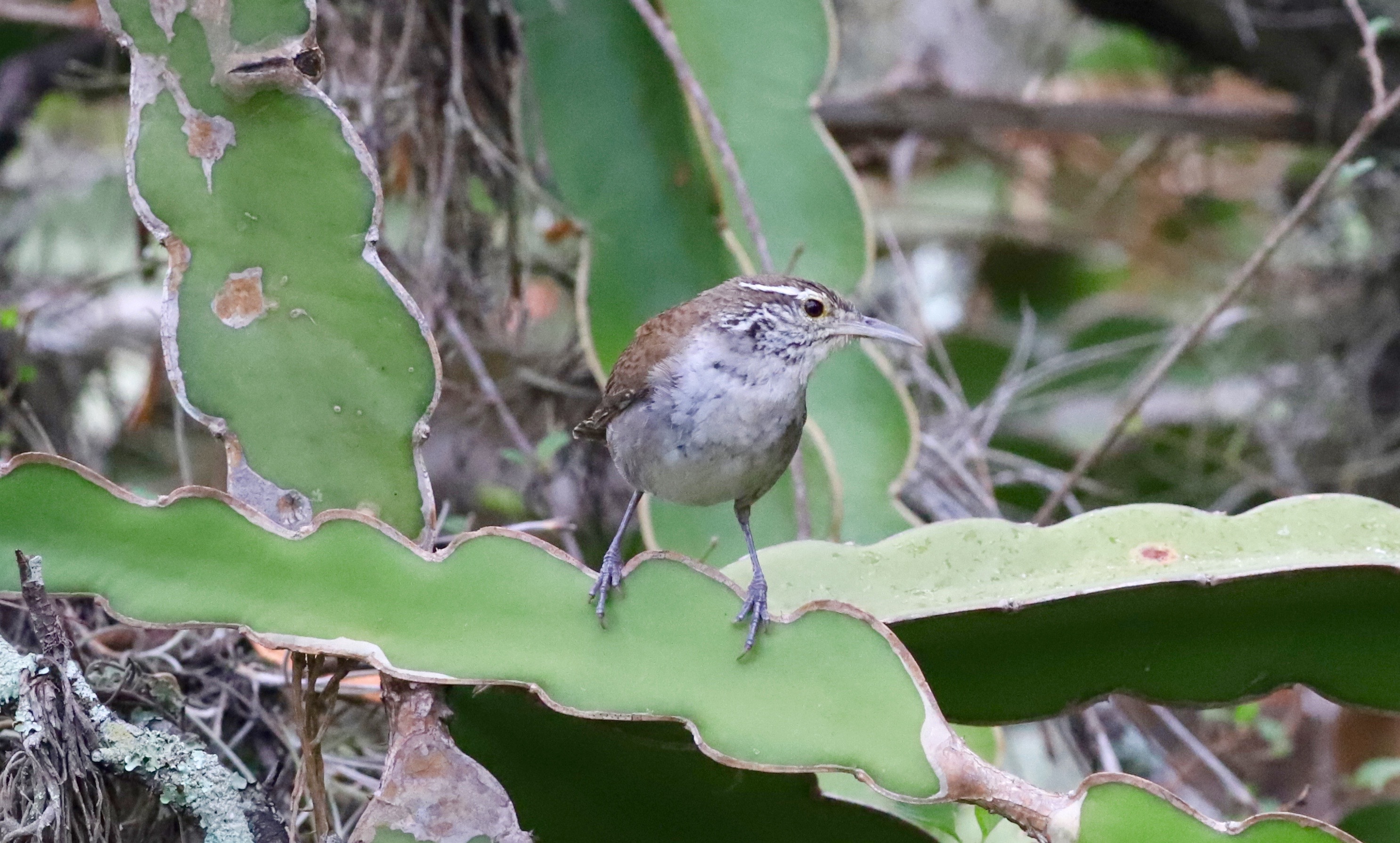
Nicifero's Wren

Suddenly we found ourselves basically a day ahead of schedule and, rather than flog some low probability options nearby, decided to adjust the schedule to squeeze in a side-trip to Tolima and made calls to shuffle our hotels for the next few nights.  We ended the day in San Francisco de Sales and, after stopping by the Jardin Encantado to pick up Indigo-capped Hummingbird for the list, took a quiet night to take stock of the new plan.

Indigo-capped Hummingbird

Tuesday, August 31 - Laguna El Tabacal


We spent the morning in the forests around Laguna El Tabacal and, while we racked up a nice selection of species, bombed on our target birds.  After everything thus far performing so well, it was actually a bit of a let down to not get targets where and when we expected them to be, a indication perhaps of how spoiled we'd been so far.  The afternoon was quiet also, adding a few more species, but nothing too memorable, and making our way onwards to fresh forests for the next day.


Wednesday, September 1 - RN Bellavista

After the slow day on Tuesday, Wednesday looked very promising.   We had a list of target birds possible at the park and came in with a very optimistic sense that we were going to see good things.  The day stated well with several singing Magdalena Antbirds and then we got really lucky with the Colombia endemic White-mantled Barbet, all from the entrance road to the park.  The forest trails themselves yielded White-bibbed Manakin and Sooty Ant-Tanager along with a family group of White-footed Tamarins, one of the very few mammals we saw on the trip.  Then we spent some time at the edge of the park and added Beautiful Woodpecker for a fifth life bird.  Not a bad day at all.

Sooty Ant-Tanager

So, really at this point the Andes part of the trip was officially over and from here were were originally planning to drop into the Magdalena Valley to look for some very special birds I had long wanted to see.  With spare time in the schedule though we had the opportunity to make a side-trip and so from here planned to jig over into Tolima Province to look for three special endemics before heading down to the valley.  The trip thus far had been very much a run of specific, often endemic, target birds and we'd seen almost all of them fairly easily, a real tribute to Daniel and his local knowledge.  We still had a lot of energy for a few more though so we excited for what was ahead.